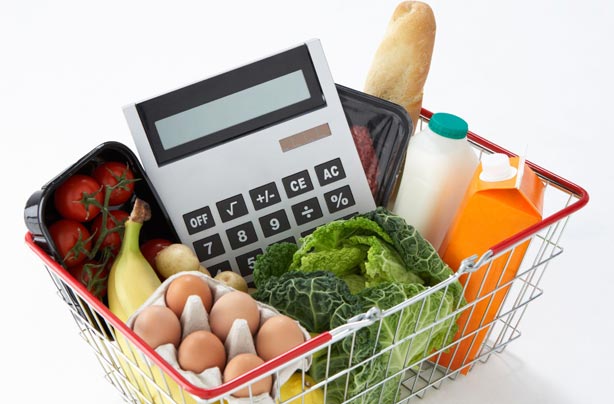
If you’ve ever said, “Eating healthy is more expensive!”, you might be right. A study by the Harvard School of Public Health revealed that the healthiest diets cost $1.50 more per day than unhealthy diets. To some, $1.50 per day doesn’t seem like a whole lot. But for those with lower incomes struggling to make ends meet, $1.50 a day can make a big difference.

If cost is coming between you and eating healthy, here is a list of seven awesome tips on how to eat healthy on a budget.
Buy in Bulk
It’s no secret buying in bulk can save you money. A lot of health food stores have a bulk food section where you can stock up on organic goodness likes nuts and spices for less. Bulk Barn is also an awesome go-to.
Utilize Your Freezer
We’ve said it once and I’ll say it again: Your freezer is probably the most under-estimated, under-appreciated, and overlooked appliance in your kitchen. Learn what foods freeze well, freeze produce before it goes bad, label all the things and keep a freezer inventory so you always know what you have on hand.
Buy Local

Consider buying fruits, vegetables, meats and eggs from local farmers. When you buy local, in-season foods are generally cheaper and travel costs are minimized. And hey, if you find a really great deal – buy extra and freeze it!
Stay Organized
And most importantly – stay organized! When your pantry, cupboards, fridge and freezer are organized, you are more likely to know exactly what you have on hand and avoid buying more stuff you don’t need.
Buy Frozen Fruit & Vegetables
Some fresh fruit (yes I’m looking at you berries!) can be silly expensive. So instead of buying it fresh, buy it frozen so you can get more bang for your buck! Some of our favourite frozen fruits and vegetables are mixed berries, mango, green peas and shelled edamame. Not only is it cheaper but if we don’t eat it up that week, we don’t have to worry about it going to waste.

Meal Plan and Make a List
Have you ever walked into a grocery store with no plan? You might end up throwing a bunch of random stuff into your cart hoping for the best. But by the end of the week, many of your groceries are still in your fridge and starting to go bad. When you take a few minutes to plan your meals and make a list, you ensure that you only buy what you need and at the end of the week, nothing will go to waste.
But Before Your Start Meal Planning, Look For Sales and Don’t Be Afraid of Marked Down Produce
A lot of grocery stores have apps that allow you to see what’s on sale from week-to-week so check those out before you start your meal planning. Also, each grocery store usually has a shelf of foods that are extremely discounted as they are reaching their expiry. Don’t be afraid! If you are going to eat them up within the next few days, keep that $5 in your pocket and take the deal! Last week I scored a $10 bag of perfectly good grapes for just $2!
 FITNESSITY